How to Renovate While Living in Your House
Most families cannot move out during a renovation. With the right order of work, a few rules on site and clear daily shutdowns, you can keep living at home while it is rebuilt around you.
Renting another place while your house is renovated is expensive, and for many families it is not practical. The good news is that most renovations, from a new kitchen to an extra floor, can be done while you live at home. It just has to be planned around the family instead of around the builder's convenience.
Phase the work
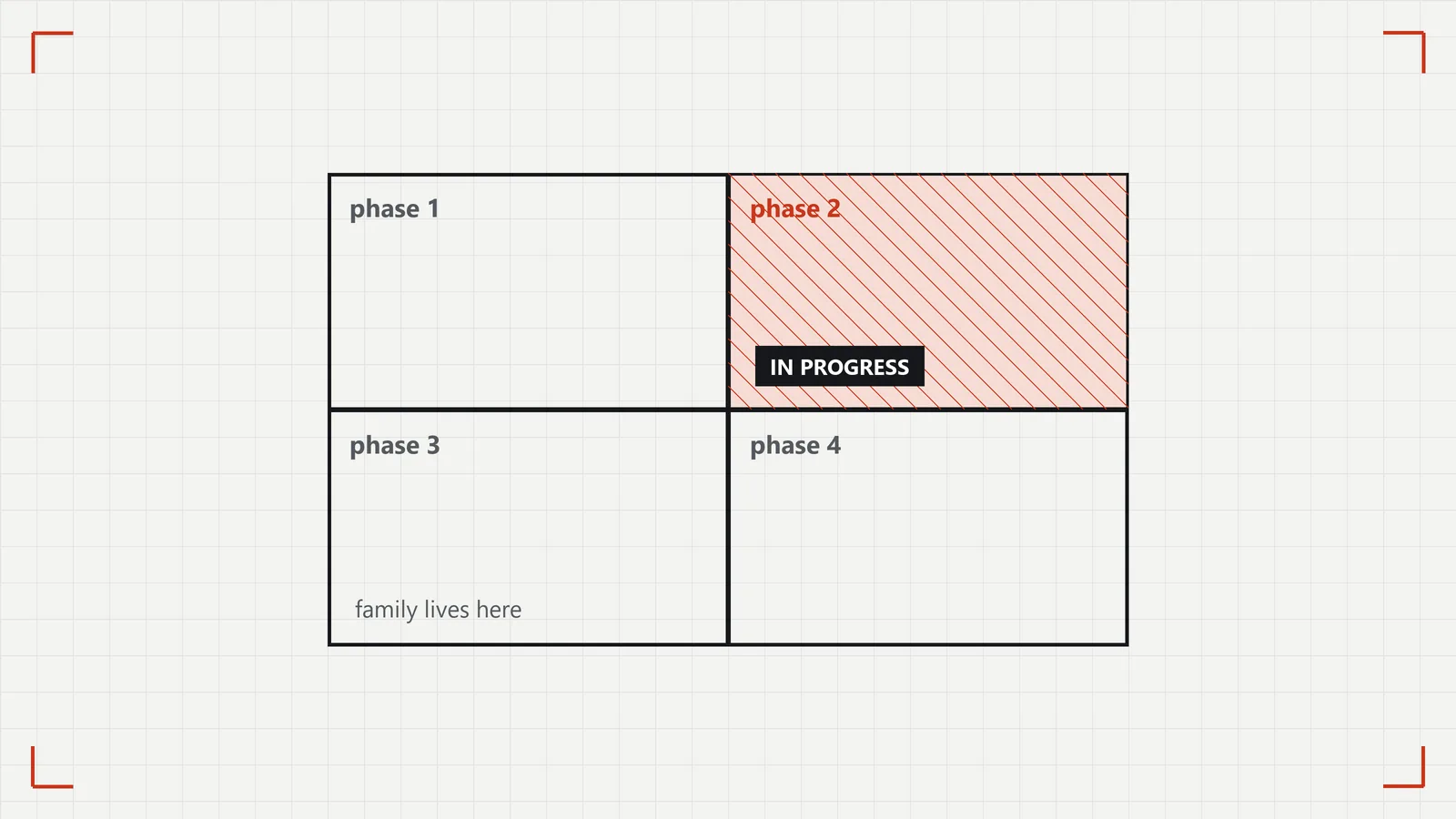
The most important decision is the order. Split the house into zones and finish one before starting the next.
- Keep one bathroom working at all times. If you are redoing two bathrooms, do them one after the other, never together.
- Keep some form of kitchen. If the main kitchen is being rebuilt, set up a temporary corner with a stove, a fridge and a water point.
- Do messy work first. Demolition, breaking floors and cutting walls make the most dust. Group them together and get them done early.
- Save the bedrooms for last if you can, so the family always has somewhere quiet to sleep.
Plan shutdowns in advance
Water and electricity have to be switched off for some jobs. Agree on fixed times, for example a few hours in the late morning, and get notice the day before. Surprise shutdowns are what make renovations stressful.
Control the dust
Construction dust gets everywhere. A few simple rules keep it under control:
- Seal the work area with plastic sheets and tape the gaps
- Cover furniture you cannot move, and close off air conditioners near the work
- Use one route for workers and material, away from the family's rooms
- Clean the work area at the end of every day
Keep the family safe
- Children and elderly members should stay out of the work zone
- No open electrical points or loose wires left in rooms that are in use
- Tools and material stored away at the end of the day
- Stairs and roofs under construction closed off
Agree on working hours
Noise is the other big strain. Fix working hours with your contractor, and respect neighbours too. Heavy breaking and drilling can be kept to set times of the day.
Adding a floor while living downstairs
An extra storey is the biggest job people do while living in a house. It is possible, but two things come first:
- Check that the structure can take it. The existing foundations and columns must be able to carry the new floor. This needs a structural check, not a guess. We work with our engineering partner Defteng on this.
- Protect the floor below. The roof slab of the lower floor becomes a work area. It must be waterproofed and protected so rain and construction water do not leak into the rooms below.
One person in charge
Renovations go wrong when nobody coordinates the plumber, the electrician, the carpenter and the painter. Each one waits for the other, and the family lives with the mess for longer. Having one supervisor plan every trade is the biggest single thing that shortens the time you live on a building site.
A sample phase order
For a common job, a new kitchen and two new bathrooms, the order might look like this:
- Bathroom one. The family uses bathroom two.
- Kitchen. A temporary cooking corner is set up somewhere else in the house.
- Bathroom two. Bathroom one is finished and in use.
- Paint and finishing in the rest of the house, room by room.
Each phase is finished before the next starts, so there is never a time when the family has no bathroom or no way to cook.
Protect what you are keeping
- Cover floors you are not replacing with hardboard or thick sheets, especially along the route workers use
- Take down curtains and wrap light fittings near the work
- Protect doors and frames from trolleys and ladders
- Agree with the contractor, in advance, who pays if something you are keeping gets damaged
Decide early and order early
Renovations slow down most while the work waits for a decision or a delivery. Choose tiles, sanitary fittings, kitchen cabinets and paint colours before work starts, and order anything that takes time to arrive. A half-finished bathroom waiting for a fitting is a bathroom the family cannot use.
Questions we hear
Do I need approval to renovate? Changes to the structure, such as removing walls, adding rooms or adding a floor, usually need approval from the Faisalabad Development Authority or your housing society. New tiles, fittings and paint normally do not. Check before you start.
How do I keep costs under control? Get an itemised estimate, fix your choices before work starts, and keep a contingency for what you find behind old walls and floors. Most surprises in renovation come from hidden pipes, old wiring and seepage.
Before you start
- Make a list of what must keep working every day
- Agree on the phase order and a rough timeline for each phase
- Fix daily working hours and shutdown times
- Get an itemised estimate. See how to read one
- Fix any seepage problems before new finishes go on
Micro Art plans renovations around the family still living in the house. Tell us what you want to change and we will suggest an order of work.


